
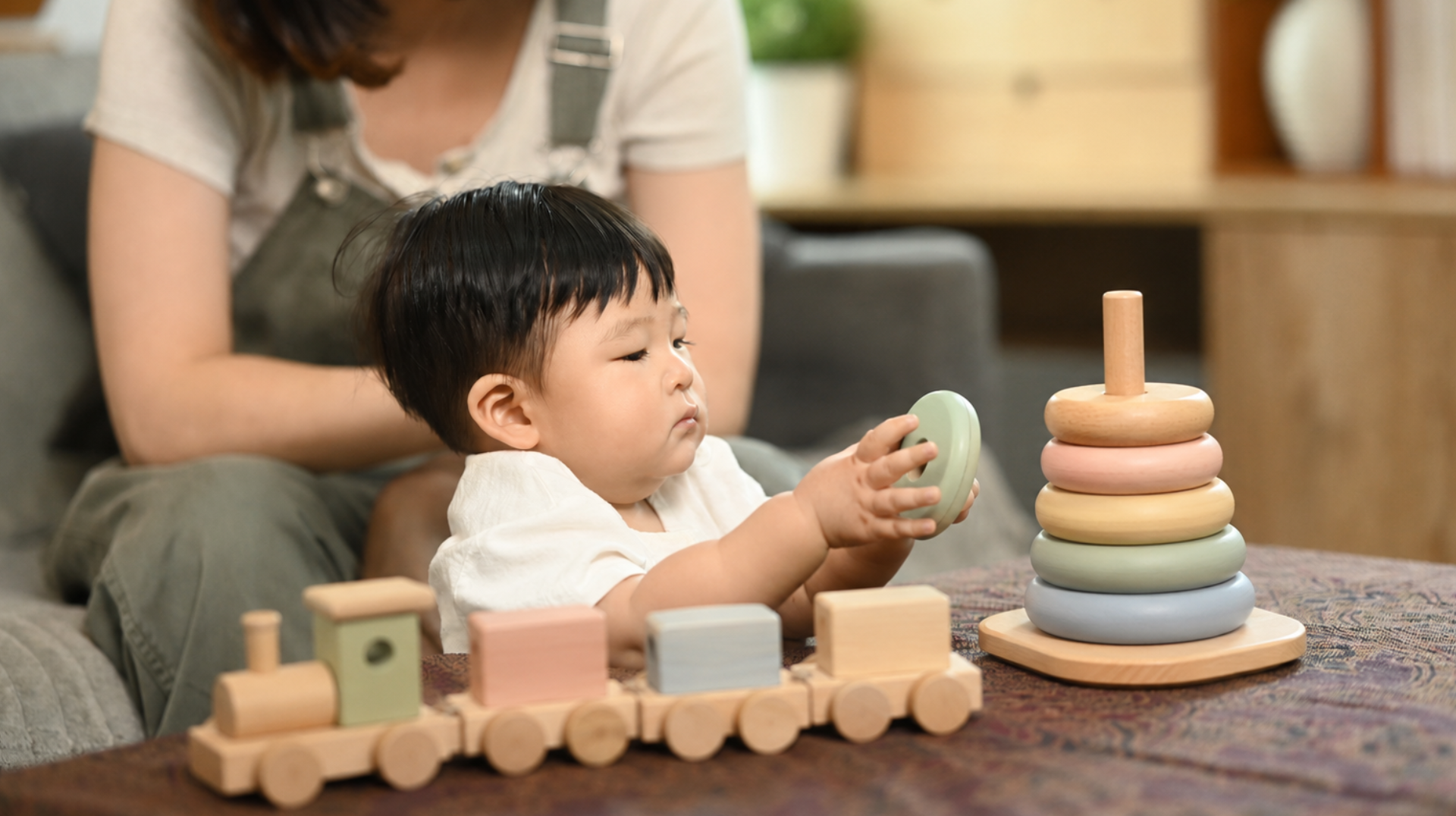
The first three years of life are not a waiting room for education. They are the foundation on which future learning, wellbeing, identity, resilience and social contribution are built.
Through the lens of The Vision Architect, the OECD’s latest focus on education and care for children under 3 is more than a sector report. It is a generational signal. As birth rates decline and early childhood participation grows, countries such as Aotearoa New Zealand must stop treating infant and toddler education as a workforce convenience and start recognising it as national infrastructure.
TALIS Starting Strong 2024 reinforces what early childhood leaders already know: quality is shaped by the people, systems, environments and conditions surrounding children every day. When those conditions are strong, children experience safety, connection, language, belonging and responsive relationships. When they are fragmented, inconsistent or under-resourced, inequity begins early.
Epigenetics adds weight to this argument. Early experiences do not simply influence what children learn; they can shape how biology responds to the world. Quality early childhood education and care is therefore not only about today’s enrolment numbers. It is about the architecture of tomorrow’s families, communities, workforce and society.
This is the work of generational impact.
The First Three Years: Designing Generational Impact Through Quality Early Childhood Education and Care
The first three years of a child’s life are a period of extraordinary growth. During this time, children are building the foundations for language, emotional regulation, identity, social connection, physical development, curiosity and trust. These foundations do not form in isolation. They are shaped by relationships, environments, routines, stress levels, nourishment, safety, culture and the quality of the adults who surround the child.
This is why early childhood education and care for children under 3 cannot be viewed as a minor subsection of the education system. It is one of the most powerful pieces of social infrastructure a country can invest in.
Through the lens of The Vision Architect, this is not simply a policy issue. It is a design issue.
What are we designing for children?
What are we designing for families?
What are we designing for the workforce?
And what kind of society are we designing through the earliest experiences we make possible?
The Demographic Signal: Fewer Births, Greater Responsibility
Across many OECD countries, birth rates are declining. At the same time, participation in early childhood education and care has expanded, particularly for children under 3. This may appear contradictory, but it is not.
A country can have fewer babies overall while still seeing increased demand for early childhood education and care. This can happen when more parents return to paid employment earlier, when families need two incomes to remain financially stable, when participation expectations rise, or when governments increasingly recognise the developmental value of quality early learning.
This creates a critical leadership question.
If fewer children are being born, should societies invest less in early childhood education?
The answer is no.
Fewer births should not mean reduced investment. They should mean sharper investment.
When birth cohorts are smaller, every child’s developmental trajectory carries even greater social, economic and civic significance. The quality of the first three years becomes not only a family concern, but a national concern. The early years become a place where future wellbeing, productivity, equity and social cohesion are either strengthened or weakened.
This is where The Vision Architect lens matters. A visionary system does not simply count children. It understands consequence.
TALIS Starting Strong 2024: quality depends on people, systems and conditions.
The OECD’s TALIS Starting Strong 2024 provides an important international evidence base for understanding early childhood education and care through the experiences of the workforce. It focuses on staff and leaders, because quality does not exist in policy language alone. Quality is lived through daily interactions.
For children under 3, quality is deeply relational. It is found in the educator who notices a baby’s cue before distress escalates. It is in the teacher who understands infant communication before spoken language emerges. It is in the kaiako who creates rhythm, safety, attachment and belonging. It is in the leader who protects ratios, supports professional learning and builds a culture where adults are emotionally available to children.
The OECD report on children under 3 highlights an important tension. As ECEC has expanded, systems have often relied on a mix of provision: public and private services, home-based and centre-based settings, services exclusively for children under 3, and mixed-age environments. These models can increase access and flexibility, but they can also create fragmentation.
Fragmentation matters because children experience systems through consistency or inconsistency.
When provision is uneven, quality can vary. Staff conditions can vary. Expectations can vary. Access can vary. Leadership capability can vary. The experience of a child in one setting may be significantly different from the experience of a child in another.
For infants and toddlers, this is not a small issue. The younger the child, the more dependent they are on the quality of the environment around them. Babies and toddlers cannot compensate for poor systems. They absorb them and it has a generational impact for two whole generations.
Why Under-3 Education is Different
Education for children under 3 is often misunderstood because it does not always look like formal learning. There may be no worksheets, no obvious lessons and no visible academic product.
But learning is happening constantly.
A baby learning that their cry will be answered is learning trust.
A toddler who is supported through frustration is learning regulation.
A child who hears rich language during care routines is developing communication pathways.
A child who is welcomed in their culture is developing identity and belonging.
A child who is given time, attention and responsive interaction is learning that they matter.
This is why quality care and education are inseparable in the first three years. Care is not the opposite of education. Care is the vehicle through which education happens.
For children under 3, pedagogy lives in the micro-moments: feeding, settling, nappy changes, transitions, play, comfort, exploration, repetition and relationship. These moments may look ordinary, but developmentally they are profound.
The Epigenetic Lens: Environments Get Under the Skin
Epigenetics helps explain why the earliest years carry such significance.
Genes provide the biological blueprint, but environments influence how that blueprint is read. Early experiences can affect patterns of gene expression, particularly in relation to stress regulation, brain development, immune function and emotional wellbeing. This does not mean a child’s future is fixed by their first three years. It does mean early environments matter deeply.
This distinction is important.
Epigenetics should never be used to create fear or fatalism. It should be used to strengthen responsibility.
Children are not predetermined by adversity. Positive relationships, stable environments, responsive caregiving and high-quality early education can buffer stress and support healthier developmental pathways. This is where quality ECEC becomes a protective factor.
A high-quality early childhood environment can provide predictability, attachment, language, emotional safety and cultural affirmation. These are not soft outcomes. They are biological, social and educational inputs.
When children experience chronic stress without adequate buffering relationships, their developing systems can become organised around survival. When children experience safety, connection and responsive care, their systems are more able to organise around learning, exploration and trust.
This is the bridge between early childhood education and generational impact.
Generational Impact is Designed in the Daily Experience of Children
Generational impact is often discussed in large-scale terms: policy reform, economic productivity, workforce participation, poverty reduction and social mobility. These are important, but they begin somewhere much smaller.
They begin in the daily lived experience of children.
A child who learns emotional regulation becomes an adult better equipped for relationships, learning and work.
A child who experiences belonging is more likely to participate with confidence.
A child whose language is nurtured is better positioned for literacy, identity and agency.
A child whose family is supported is less likely to carry the full weight of systemic stress alone.
A child whose culture is honoured learns that who they are has value.
This is how early childhood education moves through generations. It shapes not only the child, but the future parent, leader, neighbour, worker, innovator and citizen that child may become.
Through The Vision Architect lens, ECE is not a service at the edge of the education system. It is an intergenerational design platform.
The Risk of Treating ECE as Childcare Alone:
One of the greatest risks in policy and public conversation is reducing early childhood education and care to childcare.
Childcare language often positions the sector as a support mechanism for adult employment. That function matters. Families need access to reliable, affordable care. Parents and caregivers need to work, study, contribute and participate economically.
But when the sector is framed only as childcare, quality can become secondary to availability.
The OECD report makes clear that expansion must be matched with attention to quality. Access without quality is not enough. Places without professional conditions are not enough. Participation without equity is not enough.
For children under 3, poor quality is not neutral. It can mean fewer responsive interactions, less stable attachment, higher stress, weaker language exposure and less individualised care. These are not abstract concerns. They are developmental conditions.
The question cannot only be, “Do families have a place?”
The deeper question is, “What kind of place are children entering, and what is that place building in them?”
What this Means for Aotearoa New Zealand:
For Aotearoa New Zealand, this conversation is urgent.
Low birth rates, changing family structures, workforce pressures, cost-of-living realities and high ECE participation all point to the need for more sophisticated early years planning. Communities will not experience demographic change evenly. Some areas may face declining rolls, while others experience demand through housing growth, migration, employment patterns or family need.
This requires planning that is both national and local.
A Vision Architect approach would ask:
Where are babies being born?
Where are families under the greatest pressure?
Where is access strong, but quality variable?
Where are services at risk of becoming unsustainable?
Where are infants and toddlers least visible in policy decisions?
Where does the workforce need deeper investment?
Where is provision fragmented, and what does that fragmentation mean for children’s daily experience?
These questions move the sector beyond reactive planning. They place early childhood education within a broader vision for social wellbeing and generational equity.
The Workforce is the Quality Lever:
TALIS Starting Strong reinforces a central truth: quality depends on the people delivering ECEC.
For children under 3, the workforce needs specialised knowledge. Infant and toddler pedagogy requires deep understanding of attachment, brain development, movement, communication, regulation, family partnership and cultural responsiveness. It also requires emotional labour. Educators working with babies and toddlers are constantly reading cues, responding to needs, managing routines and creating calm within complexity.
Yet this work is often undervalued.
If society wants high-quality outcomes for children, it must create high-quality conditions for the adults who care for and educate them. That includes professional learning, leadership development, fair working conditions, manageable ratios, time for reflection, and recognition of the complexity of infant and toddler practice.
A system cannot ask educators to provide secure, responsive, emotionally regulated environments for children while placing those educators in insecure, pressured or unsupported conditions.
The wellbeing of the child and the wellbeing of the workforce are connected.
From provision to architecture:
The future of ECEC requires a shift from provision thinking to architecture thinking.
Provision thinking asks: How many places do we have?
Architecture thinking asks: What are those places designed to produce over time?
Provision thinking asks: Can parents access care?
Architecture thinking asks: Are children experiencing relationships, environments and teaching that support lifelong development?
Provision thinking asks: Is the sector meeting demand?
Architecture thinking asks: Is the system building equity, resilience and generational wellbeing?
This is the work of The Vision Architect: to see beyond immediate enrolment pressures and design for long-term impact.
The Opportunity Ahead:
Declining birth rates could lead to a narrow conversation about sector sustainability, service viability and workforce demand. Those conversations are necessary, but they are not enough.
The greater opportunity is to reimagine early childhood education and care as a generational investment strategy.
If there are fewer children, we have an even stronger obligation to ensure that every child has access to high-quality early experiences. If families are under pressure, we have an even stronger obligation to build systems that support them. If the science tells us early environments shape development at biological, emotional and social levels, we have an even stronger obligation to design those environments with care.
Quality ECEC is not a luxury. It is not a soft policy area. It is not simply a support for employment.
It is where human potential begins to take shape.
The first three years are not preparation for life later. They are life already underway.
When we invest wisely in infants, toddlers, families and educators, we are not only improving early childhood services. We are shaping the conditions for healthier families, stronger communities and more capable future generations.
That is the architecture of impact.
References:
[1]: https://www.oecd.org/en/publications/building-quality-education-and-care-for-children-under-three_5d960dfd-en.html?utm_source=chatgpt.com "Building Quality Education and Care for Children under ..."
[2]: https://www.oecd.org/en/about/projects/starting-strong-talis.html?utm_source=chatgpt.com "Starting Strong Teaching and Learning International Survey"
[3]: https://developingchild.harvard.edu/resources/working-paper/early-experiences-can-alter-gene-expression-and-affect-long-term-development/?utm_source=chatgpt.com "Early Experiences Can Alter Gene Expression"